
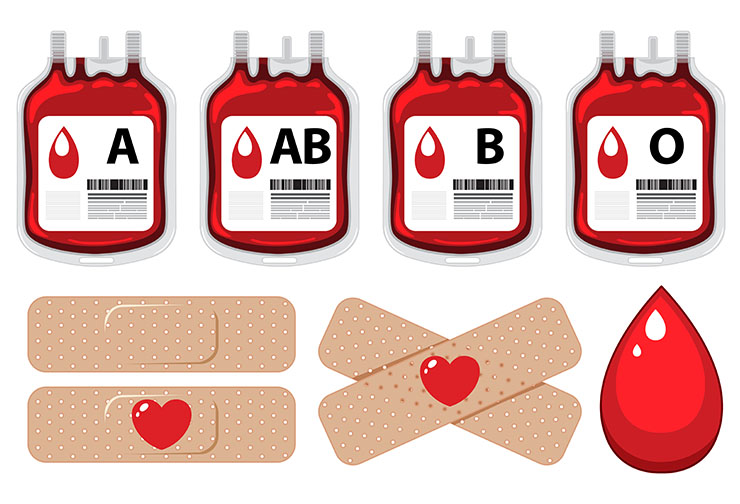
Blood typing is done prior to a blood transfusion or when classifying a person’s blood for donation. Blood typing is a fast and easy way to ensure that you receive the right kind of blood during surgery or after an injury.
If you’re given incompatible blood, it can lead to blood clumping, or agglutination, which can be fatal.
Blood typing is especially important for pregnant people. If the mother is Rh-negative and the father is Rh-positive, the child will likely be Rh-positive.
In these cases, the mother needs to receive a drug called RhoGAM. This drug will keep the mother’s body from forming antibodies that may attack the baby’s blood cells if their blood becomes mixed, which often happens during pregnancy.
The risks of blood typing
You will need to have your blood drawn in order to have it typed. Having your blood drawn carries very minimal risks, including:
- Bleeding under the skin (hematoma)
- Fainting or feeling lightheaded
- Infection at the puncture site
- Excessive bleeding
How to prepare for blood typing
No special preparation is needed for blood typing. If you think you might feel faint during the test, you may want to have someone drive you home afterward.
How blood typing is performed
The blood draw can be performed at a hospital or a clinical laboratory. Your skin will be cleaned before the test with an antiseptic to help prevent infection.
A nurse or technician will wrap a band around your arm to make your veins more visible. They’ll use a needle to draw several samples of blood from your arm or hand. After the draw, gauze and a bandage will be placed over the puncture site.
In order to determine your blood type, a lab technician will mix your blood sample with antibodies that attack types A and B blood to see how it reacts.
If your blood cells clump together when mixed with antibodies against type A blood, for example, you have type A blood. Your blood sample will then be mixed with an anti-Rh serum. If your blood cells clump together in response to the anti-Rh serum, it means that you have Rh-positive blood.
After blood typing
Your blood type can be determined in a matter of minutes. Once you know your blood type, you can donate blood and receive transfusions from donors in the compatible blood groups.
Reference :
://www.healthline.com/health/blood-typing#follow-up.